

What Is Applied Behavior Analysis Software and How Does It Help ABA Clinics?
Applied behavior analysis software connects ABA data collection, scheduling, billing, and authorization tracking, helping clinics reduce manual work, improve documentation, and support better clinical decisions.
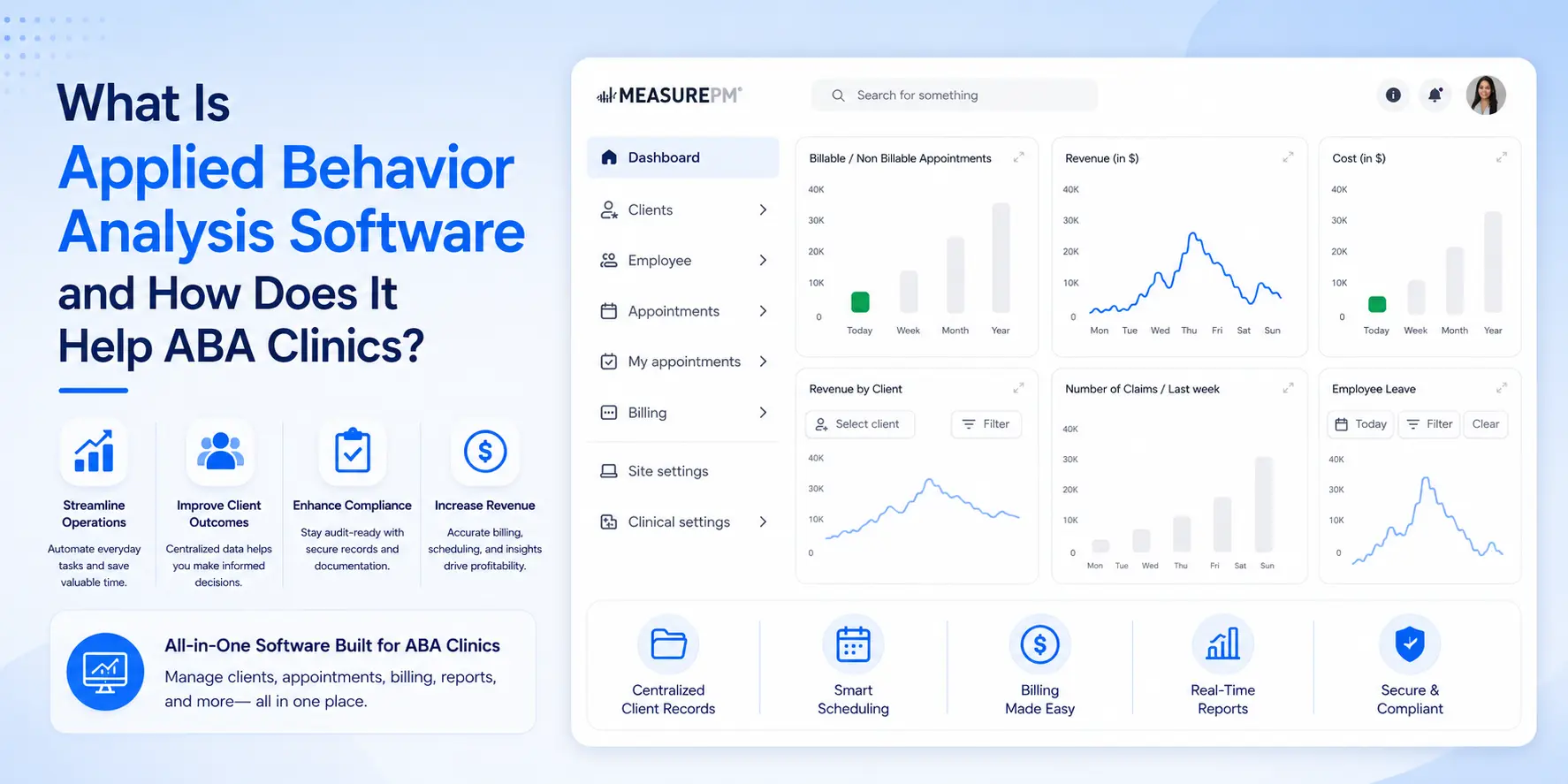
Most ABA clinics don’t set out to run five different systems at once. It just happens. Data gets recorded on paper or in one app, scheduling lives in a separate calendar tool, billing gets handled through yet another platform, and somewhere in the middle, someone on staff is manually reconciling all of it so the numbers actually match up. It works, technically, until it doesn’t. A missed authorization here, a data gap there, and suddenly a clean week turns into a week of chasing down what went wrong and where.
This is the exact problem applied behavior analysis software was built to address. Not by adding another tool to the pile, but by pulling the pieces that were never designed to talk to each other into one place.
What Applied Behavior Analysis Software Actually Is
At its core, applied behavior analysis software is practice management software built specifically for ABA clinics, rather than adapted from a generic healthcare platform. That distinction matters more than it sounds like it should. ABA has its own billing codes, its own supervision requirements, its own documentation standards tied to insurance authorizations, and workflows that don’t map cleanly onto software built for, say, physical therapy or general pediatric care.
A platform built specifically for ABA is designed around things like RBT supervision ratios, session-based data collection tied to individual treatment targets, and the specific CPT codes and modifiers that ABA billing depends on. Generic practice management tools tend to require workarounds to handle any of this well, and workarounds are exactly where errors tend to creep in.
The Core Pieces That Actually Matter
Most ABA software falls into a few functional categories, and how well they connect to each other says more about a platform’s practical value than any single feature does.
Data Collection
Behavior analysis runs on data. Frequency counts, duration recordings, trial-by-trial results, ABC data, skill acquisition tracking against treatment goals. This isn’t optional documentation sitting on the side of clinical work; it’s the clinical work, in a lot of ways. Without it, there’s no reliable way to know whether a program is actually helping.
Good ABA data collection software is built so that recording a data point during an active session takes seconds, not minutes. That matters because the harder data entry is in the moment, the more likely it gets deferred, shortened, or skipped entirely, and skipped data creates gaps that quietly distort progress graphs later.
Scheduling
Scheduling in ABA isn’t just about filling calendar slots. It has to account for RBT-to-client ratios, supervision requirements, client availability across multiple weekly sessions, and staff certifications that determine who’s even eligible to work with a given client. A scheduling error here doesn’t just create an awkward calendar gap. It can mean a session happens without proper supervision coverage, which creates both a clinical and a compliance problem.
When ABA scheduling software is connected to the rest of the system, a change in one place is reflected everywhere else automatically, rather than requiring someone to manually update three different tools every time a session shifts. A cancellation or a staff callout only has to be entered once instead of triggering a scramble of texts and separate calendar edits.
Billing
ABA billing carries its own complexity: specific CPT codes, modifiers that vary based on staff credentials and supervision structure, and payer rules that shift depending on the insurance company involved. A claim submitted with the wrong modifier, or without documentation supporting medical necessity, is at real risk of denial, and denied claims cost time and money to resubmit or appeal.
When session data flows directly into billing rather than getting manually re-entered, claims go out backed by documentation that was captured during the actual session, not reconstructed from memory afterward. Since a documentation gap is one of the more common reasons claims get denied in the first place, closing that gap at the source is a fairly direct way to address it, though results will still depend on how the rest of a clinic’s billing process is run.
Why Disconnected Systems Cause More Problems Than They Solve
A clinic running separate tools for data, scheduling, and billing isn’t necessarily doing anything wrong on paper. Plenty of clinics operate this way for years. But disconnection creates friction, and friction compounds in ways that aren’t always obvious until you’re deep in a billing audit or a denied claims backlog.
Consider how these problems tend to stack:
- Data recorded in one system doesn’t automatically inform billing documentation, so someone has to manually pull it together, and manual work introduces delay and error
- Scheduling changes made in a calendar tool don’t reflect in the data collection app, so staff sometimes walk into sessions without the right target sheets ready
- Authorization limits tracked in a spreadsheet can fall out of sync with actual sessions delivered, and a clinic can end up delivering services beyond what’s authorized without realizing it until a claim gets denied
- Supervisors reviewing progress have to log into multiple systems just to get a full picture of a single client’s status
None of these problems are catastrophic individually. Together, over months, they add strain to both clinical quality and the practice’s financial health.
What to Actually Look For in a Platform
Not every applied behavior analysis software platform is built the same way, and the differences matter more once a clinic starts scaling past a handful of clients and a small staff.
Real integration, not just co-branding. Some platforms bundle separate tools under one login without actually connecting the underlying data. Ask directly whether data collected during a session automatically feeds into billing documentation, or whether that’s still a manual step dressed up to look automated.
Built for ABA specifically. Generic healthcare software adapted for ABA often lacks native support for the measurement types ABA actually uses, frequency, duration, latency, interval recording, and trial-by-trial data among them. If a platform requires heavy customization just to record a basic ABC data sheet, that’s worth noticing early.
Usability for RBTs, not just supervisors. The people entering data most often are RBTs working directly with clients, frequently in fast-paced sessions where fumbling with a clunky interface isn’t practical. Software built with a straightforward, minimal-training interface is more likely to actually get used consistently during sessions rather than avoided.
Support for supervision workflows. BCBAs reviewing data need to see trends clearly, ideally before a supervision session rather than during it. Platforms that surface graphs and flag notable patterns automatically can make supervision a more structured clinical process rather than a quick check-in based on impression.
Billing built around ABA’s actual requirements. This means native support for the CPT codes and modifier structures ABA billing depends on, not a generic medical billing module that requires manual workarounds for every claim.
Thinking Through the Cost Question
Cost is usually the first objection that comes up when a clinic considers switching platforms, and it’s a fair one. Integrated software typically costs more upfront than piecing together cheaper standalone tools. But that comparison leaves out a real cost most clinics are already absorbing without tracking it closely: the staff hours spent reconciling data across systems, the revenue at risk from denied claims tied to documentation gaps, and the added difficulty of making clinical decisions on data that’s incomplete or delayed.
A more useful way to frame the cost question isn’t “what does this software cost” but “what is running disconnected systems actually costing us right now.” There’s no universal payback timeline here, since it depends on claim volume, current denial rates, and how much staff time is already going toward manual reconciliation. But it’s a more honest starting point than comparing sticker prices alone.
What Switching Actually Looks Like
Clinics considering a move from disconnected tools to an integrated platform often hesitate over the transition itself, and that hesitation is reasonable. Migrating historical data, retraining staff, and running two systems in parallel during a transition period all take real effort, and that effort shouldn’t be minimized just to make a sale.
What tends to make the switch worthwhile is what it removes going forward: fewer manual reconciliation steps, one less place for a scheduling change to fall through the cracks, and supervisors who aren’t logging into three separate tools to piece together a single client’s status. Whether that trade-off is worth the upfront disruption depends on how much friction a particular clinic is already dealing with day to day.
Bringing It Back Together
Applied behavior analysis software isn’t really about replacing clinical judgment with technology. It’s about removing the friction that keeps good clinical judgment from having the information it needs, on time, without three separate logins and a spreadsheet stitched together at the end of the week. Data collection, scheduling, and ABA billing software working as one connected system is designed to mean clinicians spend more time on actual client care and less time reconciling numbers that should have matched up in the first place.
Frequently Asked Questions
What’s the difference between applied behavior analysis software and general practice management software?
ABA-specific software is built around the unique requirements of behavior analysis practice: session-based data collection tied to treatment targets, RBT supervision ratios, and ABA-specific billing codes and modifiers. Generic practice management software usually requires workarounds to handle these details properly.
Can applied behavior analysis software help reduce claim denials?
It can help address one common cause of denials, missing or inconsistent documentation, by connecting session data directly to billing. It isn’t a guarantee against denials from other causes, like authorization issues or coding errors unrelated to documentation.
Is applied behavior analysis software difficult for RBTs to learn?
It shouldn’t be, if the platform is designed well. Software built specifically for real-time use during sessions is generally easier for new staff to pick up with minimal training. If a platform requires extensive training just for basic data entry, that’s usually a sign of design complexity rather than an unavoidable learning curve.
How long does it typically take to switch to a new ABA software platform?
This varies by clinic size and how much historical data needs to be migrated, but most transitions involve a parallel period where both systems run briefly to confirm accuracy before fully cutting over to the new platform.
Does applied behavior analysis software help with insurance authorization tracking?
It can, particularly platforms that connect data collection to billing. Since authorizations are typically tied to specific units or session counts, having visibility into what’s been used and what remains can help a clinic avoid delivering services beyond what’s authorized.
